
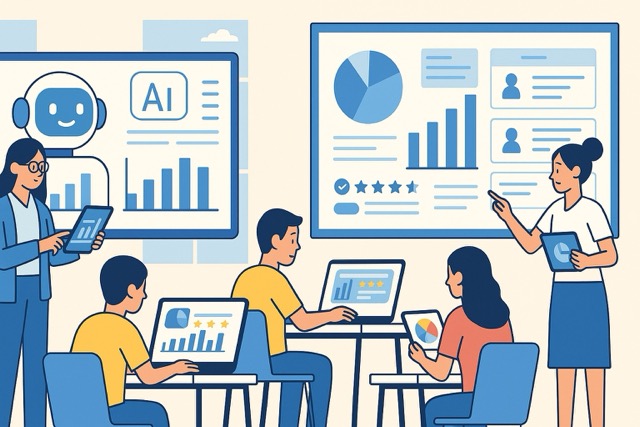
You’re teaching and learning in a world that doesn’t wait. Students expect flexibility, schools need efficiency, and educators are stretched thin. That’s where AI steps in—not as a replacement for teachers, but as a tool that reshapes how learning happens. From tailoring lessons to managing workloads, artificial intelligence is changing classrooms into data-powered environments that adapt in real time. In this article, you’ll learn how AI supports personalized learning, what tools are already working today, and how you can use this shift to prepare for a smarter, more responsive educational future.
Teaching That Adapts in Real Time
When you use AI in the classroom, you’re not guessing what students need—you’re responding with precision. Adaptive learning platforms like Carnegie Learning and Squirrel AI use algorithms to analyze each student’s progress, then adjust the difficulty, content, or format based on performance. It’s the opposite of one-size-fits-all. If a student is struggling with fractions but excelling at geometry, the system knows and acts.
This kind of responsiveness helps close skill gaps faster and keeps students engaged. Instead of repeating lessons that don’t land or rushing through topics that need more time, you’re meeting learners where they are. As a result, students stay motivated, and you get clearer insights into how well your teaching is working.
Feedback That Doesn’t Wait Until the Test
AI makes feedback instant. Tools like Century Tech and Gradescope use machine learning to scan answers and provide insights right away. You no longer need to wait for a quiz or grade a stack of papers to find out who’s falling behind. These platforms can highlight trends across your entire class or point out when a specific student is off track.
Even better, some AI tutors simulate one-on-one support. They guide students through problems, prompt them with helpful hints, and push them toward understanding—not just memorizing. You’re still the teacher, but now you have data-backed feedback loops that help you course-correct sooner instead of later.
Reducing Repetitive Tasks, Reclaiming Your Time
Let’s face it—grading, lesson planning, and paperwork eat up more time than teaching. AI helps you reclaim those hours. Platforms like Canva for Education or Curipod help generate slides and worksheets based on specific objectives. Automated grading software handles multiple-choice, fill-in-the-blank, and even some open-ended questions. That frees you to spend more time with students and less time on logistics.
You’re not outsourcing your job—you’re streamlining the busywork. When technology handles the repetitive parts, you can focus on the parts that require your experience: mentoring, challenging, encouraging, and adapting in ways no software can.
A Classroom That Reflects the Real World
The future workforce will use AI tools daily, so your classroom should reflect that. Students who interact with intelligent learning systems build skills in self-assessment, digital collaboration, and independent problem-solving. These aren’t bonus features—they’re essentials for modern careers.
When your students learn through AI, they become familiar with systems that track performance, adjust to inputs, and require active participation. That kind of learning isn’t passive. It demands curiosity, experimentation, and reflection—all of which prepare them for complex, fast-moving environments beyond school walls.
Equity Depends on Access, Not Just Innovation
AI only helps if everyone can use it. That means devices, connectivity, and training have to be in place. If your school doesn’t have the infrastructure, the promise of AI turns into a gap that widens existing inequality. Districts with limited budgets often miss out on adaptive learning tools, while others move ahead with advanced platforms and real-time analytics.
But equity isn’t just about bandwidth—it’s about support. Educators need time and training to learn how to use AI tools well. Without that, even the best platforms become underused. If you want to close the digital divide, focus on investing in access and professional development alongside any new tech.
Privacy, Ethics, and the Data Dilemma
Every time AI helps personalize a lesson, it’s using data to do it. That raises real questions about privacy and fairness. Who owns the data? How is it stored? Can the algorithms show bias? These aren’t fringe concerns—they’re central to how you use AI responsibly.
Look for tools that are transparent about their data practices. Ask vendors how they audit for bias. Make sure parents and students understand what’s being collected and why. You don’t have to be a cybersecurity expert to make good decisions—you just need to stay informed and ask the right questions before you bring a tool into your classroom.
What the Future Really Looks Like
You’re not replacing teachers with robots. You’re expanding what teachers can do. In the future, your classroom might include AI teaching assistants that guide students through exercises while you offer real-time coaching. Or platforms that identify students at risk of falling behind before it shows up in their grades.
As these tools become smarter, your job becomes more human. AI can’t replace empathy, creativity, or the ability to inspire. But it can free up your time, give you better insights, and let you focus on building relationships and encouraging growth. That’s the classroom of the future—tech-assisted but human-led.
What AI Adds to the Classroom
- Personalized instruction based on performance
- Real-time feedback to guide learning
- Time-saving tools for grading and planning
- Data-driven insights into student progress
- Skill development for digital literacy and autonomy
In Conclusion
Artificial intelligence is no longer an add-on—it’s part of the classroom experience. When used with purpose, it empowers you to teach better, respond faster, and give students the tailored support they need to thrive. But it’s not just about the tools. It’s about using those tools to create smarter, more inclusive, and more human-centered learning environments. The future of education isn’t just digital—it’s personal, proactive, and full of potential. And with the right approach, you’re already on your way there.
Looking for fast-paced, engaging content on education technology and the classroom of the future? Find me on TikTok.

Walter Morales is President of Commonwealth Advisors, Inc., with over 30 years of experience in financial planning and investment strategy. An educator, philanthropist, and community leader, he is dedicated to advancing financial literacy and expanding educational opportunities.